
VCAPCD News
Blue Whales & Blue Skies cut air pollution in 2025
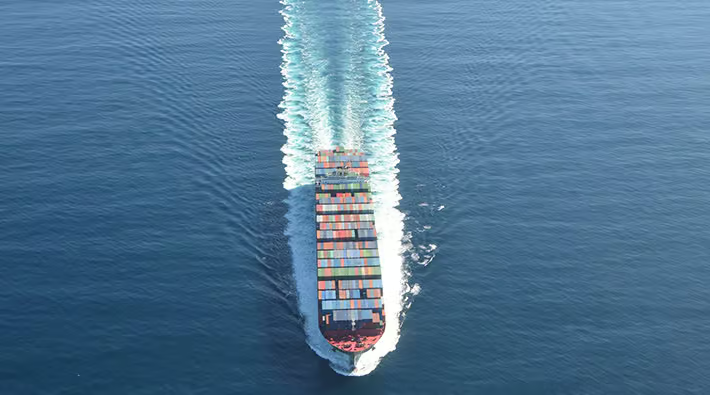
Shipping line efforts also reduced whale strike risk and underwater noise
(Ventura, Calif. — May 4, 2026) Researchers have verified that the 2025 Protecting Blue Whales and Blue Skies (BWBS) program resulted in a reduction of more than 50,000 metric tons of regional greenhouse gas emissions, a 40% lower risk of fatal ship strikes to whales and a 70% decrease in the underwater noise acoustic intensity that negatively affects whales.
The Ventura County Air Pollution Control District is a partner in BWBS, which encourages and verifies efforts by global shipping lines transiting along California’s coast to cooperate with vessel speed reduction (VSR) to protect public health and reduce risks to endangered and threatened whales. Participation is open to container, bulk, tanker and car carrier shipping lines and, in 2026, cruise lines.
After each VSR Season, BWBS analyzes vessel Automatic Identification System data to determine enrolled fleets’ cooperation levels and works with research partners to quantify the environmental benefits of the industry’s voluntary efforts.
For the 2025 Season, BWBS verified that 787 vessels across 44 global shipping lines reduced their speeds for more than 553,839 miles, which is equal to circling the globe more than 22 times.
Analysis by Starcrest Consulting Group LLC showed this resulted in estimated reductions of:
- 1,491 tons of nitrogen oxides (NOx), which contributes to the formation of ground-level ozone, also known as smog
- 9 tons of diesel particulate matter, which is considered an air toxic
- 37 tons of oxides of sulfur (SOx)
- 55,771 metric tons of greenhouse gases (carbon dioxide equivalent)
Large ocean-going vessels that travel along the California coastline and into the state’s ports are a significant source of air pollution. These vessels emit NOx and other combustion-related pollutants, such as particulate matter (PM), SOx and greenhouse gases. Slower vessel speeds reduce engine load and fuel consumption, typically lowering emissions by 20 to 25 percent.
With California’s onshore prevailing winds, emissions from ocean-going vessels often flow into coastal communities, contributing to exceedances of the state and federal air quality standards designed to protect human health. Ventura County exceeds state and federal standards for ozone. Most exceedances for ozone occur during the warmer months, making cooperation with VSR during this period especially critical.
BWBS is a collaborative partnership among government agencies, foundations and environmental organizations. Partners include the California Marine Sanctuary Foundation; Santa Barbara County, San Luis Obispo County, Northern Sonoma County, and San Diego County Air Pollution Control Districts; Bay Area Air Quality Management District; Monterey Bay Air Resources District; Channel Islands, Monterey Bay, Greater Farallones, and Cordell Bank National Marine Sanctuaries; and Benioff Ocean Science Laboratory.
For more information on the 2025 environmental results, visit the BWBS website.
Recent Posts
Air Quality E-News
We will never sell, trade or give your information away. Read our Privacy Policy.